Systems Integration
Connect AI and new software to the systems you already run.
We modernize legacy systems step by step: document what they do, move the data and rebuild what holds you back. Each new part runs beside the old one until the results match.
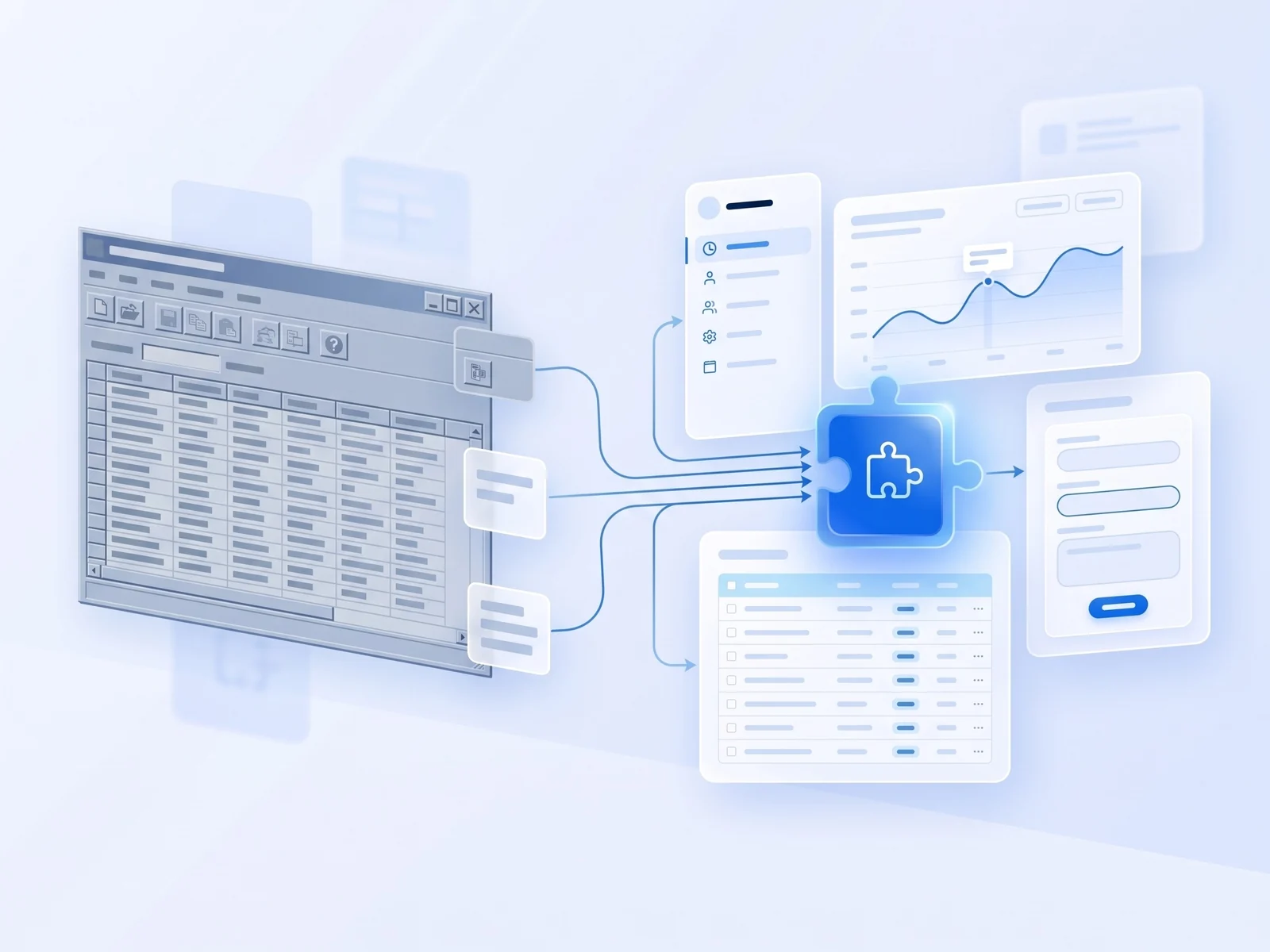
A legacy system usually still does important work. Depending on the system, we wrap it with modern APIs, move its data to a current platform, rebuild individual modules or replace it in stages. AI can be added at any of these steps.
The trigger is the cost of each change, not the system’s age.
Nothing is switched over until the new part matches the old one.
We document the system’s data, rules, interfaces and users, then agree on the target, starting where risk or cost is highest.
We modernize one module, data set or interface and compare its results with the existing system on real data.
We switch over the remaining parts one by one, each with a rollback plan, then retire what is no longer needed.
We document what one module of the legacy system does, then rebuild or wrap it and run the old and the new side by side on the same data. Nothing is switched over until the results match. The pilot ends with a measured comparison and a plan for the remaining parts.
We need access to the system and its data, time with the people who use it and anyone who knows how it was built.

Connect AI and new software to the systems you already run.

Portals and internal tools built around your process and your users.

One clean data model, so dashboards, search and AI show the same figures.
Rarely. Many systems can keep their core for years once they have modern APIs and a current data platform. We recommend rewriting a part only where keeping it costs more, and we show the comparison in Discovery.
One part at a time. Each switch-over has a rollback plan agreed with your team.
Yes. An AI application can read the existing system’s data and documents without changing them, while the larger work continues.
Share what it does, what it runs on and what it must do next. We will suggest a first step that lowers risk.