AI Applications
AI that answers from your own documents and links each answer to its source.
We bring your records, documents and external feeds into one clean, current data model. Dashboards, maps, search and AI then read the same figures, each traceable to its source.
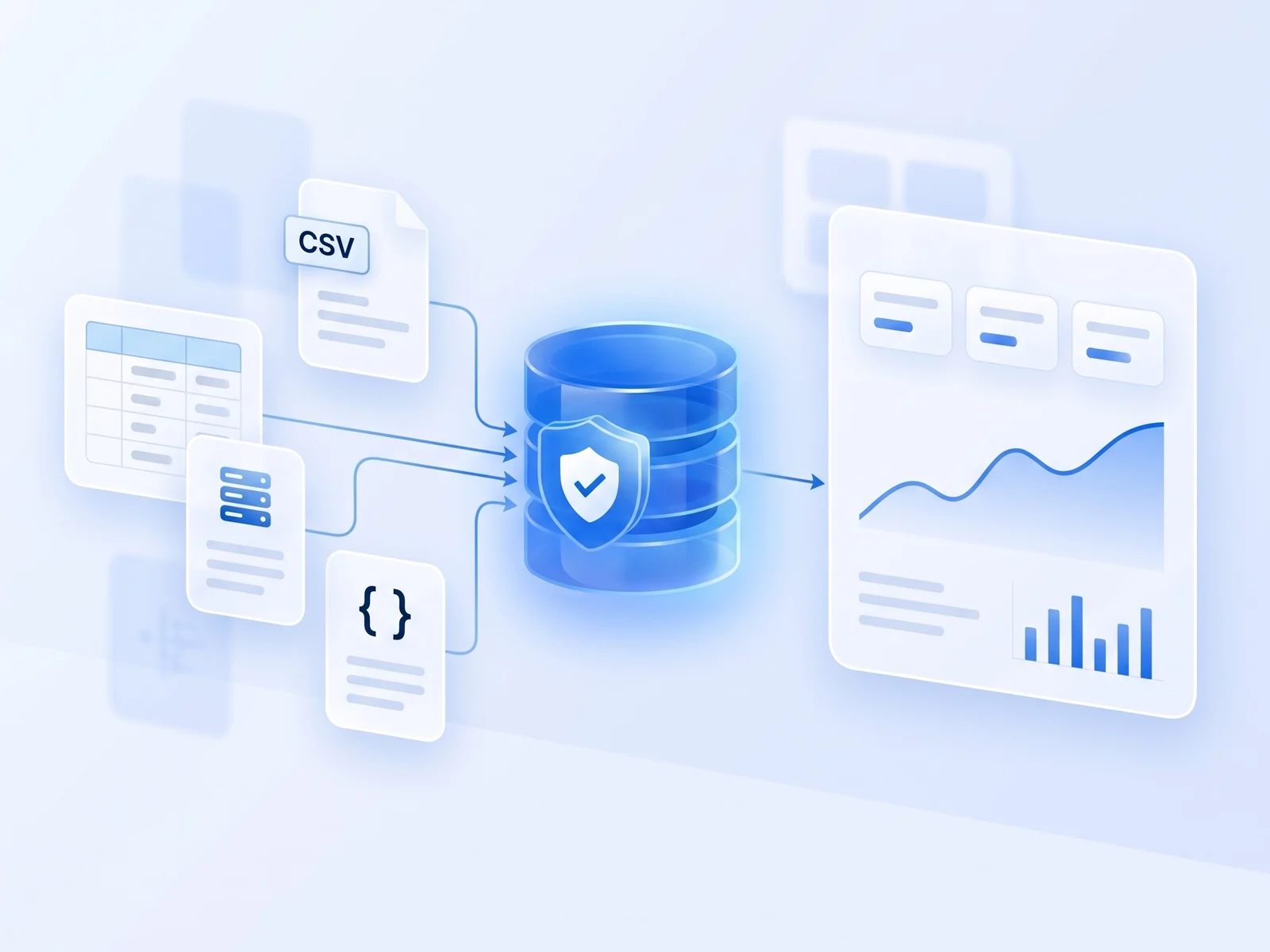
A data platform is the layer between the systems that produce data and the people who need answers from it. It pulls data from each source, cleans and links it, then publishes it to reports, maps, search and AI. Structured records sit beside PDFs, web pages and other documents, with intelligent search across both.
The data exists, but the same question gets different answers.
Each stage ends with figures you can compare against the ones you already trust.
We agree on the first questions, then produce a source map (owners, refresh cycles, data quality) and a target data model.
We connect the key sources and build one working view (a dashboard, map, search page or API).
We add the remaining sources, scheduled refreshes, quality checks, access control and monitoring.
We choose one figure that different teams report differently, for example open cases or active customers. We trace it to its sources, agree on one definition and build the pipeline that produces it every day. The pilot ends with a dashboard your teams compare against the numbers they trust today.
We need access to each source or an export, the person who owns it and the figures your team trusts today.
AI that answers from your own documents and links each answer to its source.
Connect AI and new software to the systems you already run.
Not by default. We build on what works and add what is missing: pipelines, a clean data model, search or a publishing layer. Replacement is a separate decision, discussed in Discovery.
Yes. We extract text, tables and key fields from reports and PDFs, including scanned files, and index them next to your structured data. That also prepares the platform for AI.
Each pipeline runs data quality checks, and every figure on a dashboard or map can be traced back to its source and refresh date.
Show us where its numbers come from. We will map its sources and show what automating it would take.